 Skip to content
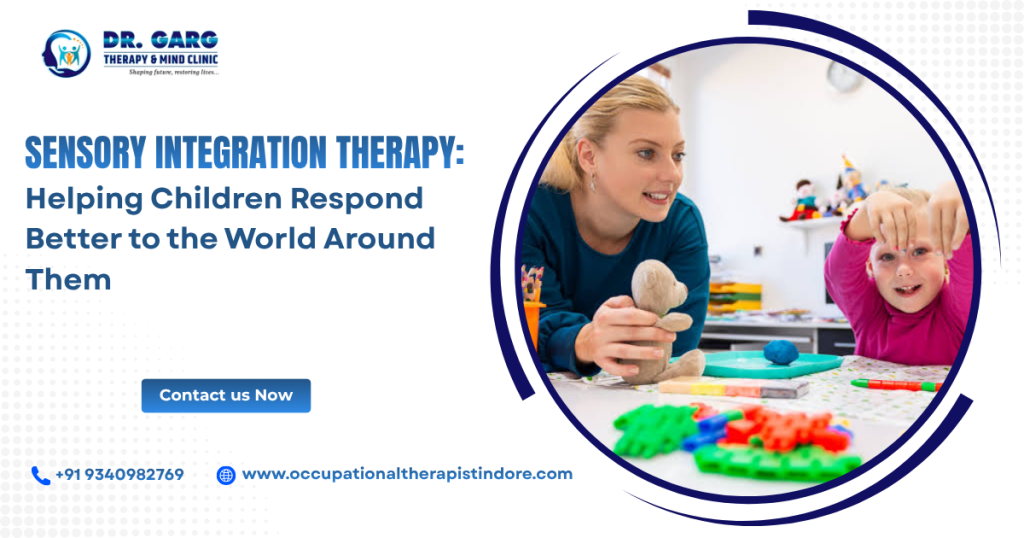
Every child experiences the world through their senses. Sounds, lights, textures, movements, smells, and physical touch constantly provide information to the brain. For some children, processing this information can be difficult. They may become uncomfortable with certain sounds, avoid particular textures, dislike being touched, have difficulty sitting still, or struggle with activities that require coordination and balance.
Sensory Integration Therapy is designed to help children process and respond to sensory information in a more organized and meaningful way. Through structured and play-based activities, children can gradually develop better sensory processing, body awareness, coordination, attention, and participation in everyday activities.
What Is Sensory Integration Therapy?
Sensory Integration Therapy focuses on helping the brain process information received through different senses. These include touch, movement, balance, body position, sound, sight, taste, and smell.
A child with sensory processing difficulties may respond differently to everyday experiences. For example, a child may cover their ears when they hear certain sounds, avoid messy play, become uncomfortable with specific clothing materials, or constantly seek movement.
Therapy does not simply aim to make a child tolerate everything around them. Instead, the goal is to provide appropriate sensory experiences in a structured environment so the child can gradually learn to respond more comfortably and participate in daily activities.
Signs That a Child May Need Sensory Support
Sensory differences can appear in many ways, and every child is different. Parents may notice behaviors such as:
- Discomfort with loud or unexpected sounds
- Avoiding certain textures, foods, or clothing
- Difficulty sitting for activities
- Frequent spinning, jumping, or seeking movement
- Problems with balance or coordination
- Difficulty completing everyday tasks
- Becoming overwhelmed in crowded or noisy environments
- Avoiding playground activities
- Difficulty transitioning between activities
- Challenges with attention and body awareness
These behaviors do not automatically mean that a child needs therapy. A qualified professional can assess the child’s individual needs and determine whether sensory-based intervention may be appropriate.
How Sensory Integration Therapy Can Help
A carefully planned sensory program can support several areas of a child’s development. Activities may involve swinging, climbing, balancing, pushing, pulling, tactile play, movement games, or other age-appropriate exercises.
The activities are selected according to the child’s needs and response to sensory input.
With consistent support, therapy may help children improve:
Body Awareness: Children can learn to understand where their body is in relation to their surroundings.
Balance and Coordination: Movement-based activities can support gross motor skills, coordination, and physical confidence.
Attention and Participation: Structured sensory activities may help some children become more comfortable and prepared for learning or other tasks.
Daily Activities: Better sensory processing can support participation in dressing, eating, grooming, playing, and classroom activities.
Emotional Regulation: Learning to recognize and manage sensory experiences can help children cope better with situations that previously felt overwhelming.
Sensory Integration and Occupational Therapy
Sensory processing is often addressed as part of occupational therapy because sensory abilities are closely connected to everyday activities.
Through Occupational therapy Indore, children can receive individualized support for skills related to play, learning, self-care, motor development, and participation in daily routines.
An occupational therapist may observe how a child responds to different sensory experiences and then create activities based on their specific requirements. The approach should be personalized rather than applying the same exercises to every child.
When Speech and Sensory Development Overlap
Communication and sensory processing can sometimes affect a child’s participation in therapy, school, and social situations. A child who becomes overwhelmed by sounds or has difficulty maintaining attention may also find communication-based activities challenging.
This is where a multidisciplinary approach can be useful. Alongside sensory and occupational support, Speech therapy Indore can focus on communication-related needs such as speech sounds, language development, understanding, expression, and social communication.
When different professionals work toward shared developmental goals, parents can get a more complete understanding of the child’s strengths and areas that need additional support.
Sensory Support for Children With Autism
Many children with autism experience sensory differences. Some may be highly sensitive to particular sounds, lights, textures, or movements, while others may actively seek certain sensory experiences.
Sensory support can be one part of a broader developmental plan for children with autism. Depending on the child’s needs, their support plan may include occupational therapy, communication intervention, behavioral support, and parent guidance.
For children who require behavioral intervention, ABA therapy Indore may also be considered as part of an individualized program. The specific therapies a child needs should be determined according to their developmental profile, goals, and professional assessment.
A Child-Centered Approach Matters
One of the most important aspects of sensory-based intervention is understanding the child rather than focusing only on a particular behavior.
Dr. Priyanka Garg emphasizes the importance of understanding each child’s individual developmental needs and creating a supportive environment where children can learn through meaningful activities. A child-centered approach allows therapy goals to be connected with real-life needs, whether that means participating in classroom activities, playing with peers, improving coordination, or becoming more independent with daily routines.
Parents also play an important role. Therapists can guide families on how to create supportive routines and provide appropriate opportunities for movement, play, communication, and independence at home.
What Parents Can Do at Home
Parents can support their child’s development by creating predictable and comfortable routines. Simple activities such as outdoor play, age-appropriate movement games, drawing, building blocks, supervised messy play, and other enjoyable activities can provide opportunities for learning and exploration.
However, sensory activities should not be selected only because they are popular online. A child’s sensory needs are individual, and an activity that is helpful for one child may not be suitable for another.
Parents should discuss concerns with a qualified professional before introducing a structured sensory program, particularly when the child has significant developmental or behavioral challenges.
Helping Children Build Confidence Step by Step
Every child’s developmental journey is different. Some children may respond quickly to new activities, while others need more time, repetition, and encouragement.
The purpose of Sensory Integration Therapy is not to change who a child is. It is to help children develop skills that can make everyday experiences more manageable and meaningful.
With appropriate assessment, individualized therapy, family involvement, and consistent support, children can work toward greater participation and independence in their daily lives.
If you have concerns about your child’s sensory responses, communication, motor skills, attention, or everyday participation, consider discussing those concerns with a qualified child-development professional. Early understanding and appropriate support can help families identify practical ways to encourage a child’s development and confidence.
