 Skip to content
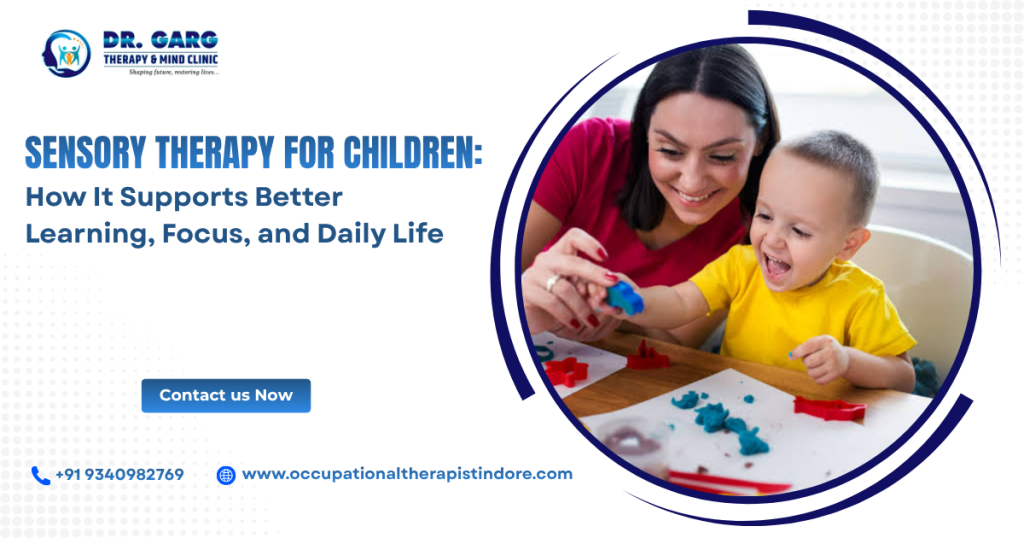
Sensory Therapy: Helping Children Thrive Through Better Sensory Processing
Every child experiences the world differently. While most children naturally adapt to sounds, touch, movement, and visual stimuli, some may struggle to process sensory information effectively. These challenges can affect learning, communication, behavior, and everyday activities. This is where sensory therapy plays an important role.
According to Dr. Priyanka Garg, early identification and the right therapeutic approach can significantly improve a child’s ability to participate confidently in daily life. Sensory therapy is designed to help children understand and respond to sensory input in a healthy and organized way, allowing them to become more independent and comfortable in different environments.
What is Sensory Therapy?
Sensory therapy is a specialized therapeutic approach that helps children who experience difficulties processing sensory information. It focuses on improving the brain’s ability to organize and respond appropriately to different sensory experiences.
Children receive information through their senses, including:
- Touch
- Sight
- Hearing
- Taste
- Smell
- Balance (Vestibular System)
- Body Awareness (Proprioception)
When the brain struggles to organize these sensations, children may become overwhelmed, distracted, anxious, or avoid certain activities. Sensory therapy uses structured activities to improve these responses gradually.
Signs Your Child May Benefit from Sensory Therapy
Every child is unique, but some common signs include:
- Difficulty concentrating during activities
- Overreaction to loud noises or bright lights
- Avoiding certain clothing textures
- Constant movement or inability to sit still
- Poor balance and coordination
- Delayed motor skill development
- Difficulty with handwriting
- Frequent meltdowns in crowded environments
- Challenges with transitions
- Poor body awareness
These signs do not automatically indicate a developmental disorder, but they are worth discussing with an experienced child development professional.
How Sensory Therapy Works
Sensory therapy uses play-based, engaging activities that encourage the nervous system to respond more effectively to sensory input.
A therapy program may include:
- Swing and balance exercises
- Obstacle courses
- Deep pressure activities
- Texture exploration
- Fine motor skill training
- Hand-eye coordination exercises
- Balance and movement activities
- Interactive sensory games
Each therapy plan is personalized based on the child’s strengths, developmental goals, and sensory profile.
Benefits of Sensory Therapy
With consistent intervention, many children experience noticeable improvements in daily functioning.
Some important benefits include:
Better Focus and Attention
Children often become more attentive during learning and structured activities.
Improved Emotional Regulation
They learn healthier ways to manage frustration, anxiety, and sensory overload.
Enhanced Motor Skills
Activities improve both fine motor skills (writing, buttoning clothes) and gross motor skills (running, jumping, climbing).
Increased Confidence
As children gain independence, they become more willing to explore new environments and participate in social activities.
Better Learning Ability
Improved sensory processing often supports classroom participation and academic performance.
Improved Social Interaction
Children may communicate more comfortably and participate better in group settings.
Who Can Benefit from Sensory Therapy?
Sensory therapy can help children experiencing:
- Sensory Processing Difficulties
- Autism Spectrum Disorder (ASD)
- ADHD
- Developmental Delays
- Learning Difficulties
- Coordination Challenges
- Fine Motor Delays
- Behavioral Regulation Difficulties
Not every child requires the same approach. Professional assessment helps determine the most suitable intervention.
Why Early Intervention Matters
One of the biggest advantages of sensory therapy is that it works best when started early.
Early intervention can:
- Improve developmental milestones
- Support school readiness
- Reduce behavioral challenges
- Build independence
- Strengthen communication skills
- Improve family routines
Children’s brains are highly adaptable during early childhood, making this an ideal time to introduce targeted therapeutic strategies.
The Role of Parents in Sensory Development
Parents are an essential part of every child’s progress.
Dr. Priyanka Garg encourages families to continue sensory-friendly activities at home, such as:
- Creating simple sensory play sessions
- Following structured daily routines
- Encouraging outdoor physical play
- Limiting excessive screen time
- Practicing calming techniques
- Providing positive reinforcement
Consistency between therapy sessions and home activities often leads to better long-term utcomes.
Also Read Our Success Story :- 3 साल का संघर्ष और अनगिनत प्रयास — ऑटिज़्म से आत्मविश्वास तक का प्रेरणादायक सफर
What to Expect During Therapy
Every child begins with an individual assessment to understand their sensory strengths and challenges.
Based on the evaluation, therapy goals are created to improve:
- Daily living skills
- Emotional regulation
- Motor coordination
- Classroom participation
- Social engagement
- Independence
Progress is monitored regularly, and therapy activities are adjusted according to the child’s development.
Expert Guidance Makes a Difference
Successful sensory therapy requires patience, consistency, and evidence-based techniques. Working with an experienced child development professional ensures that therapy is tailored to the child’s individual needs rather than following a one-size-fits-all approach.
Dr. Priyanka Garg focuses on understanding each child’s unique developmental profile and works closely with parents to create realistic, measurable goals that support meaningful progress.
Final Thoughts
Sensory therapy is more than helping children manage sensory experiences—it helps them build confidence, improve communication, strengthen learning abilities, and participate more comfortably in everyday life.
Every child deserves the opportunity to reach their full potential. With early assessment, personalized intervention, and family involvement, children can develop essential life skills that support their long-term growth and independence.
If you notice your child struggling with sensory challenges, seeking guidance from Dr. Priyanka Garg can help you better understand your child’s needs and explore the most appropriate therapy options.
