 Skip to content
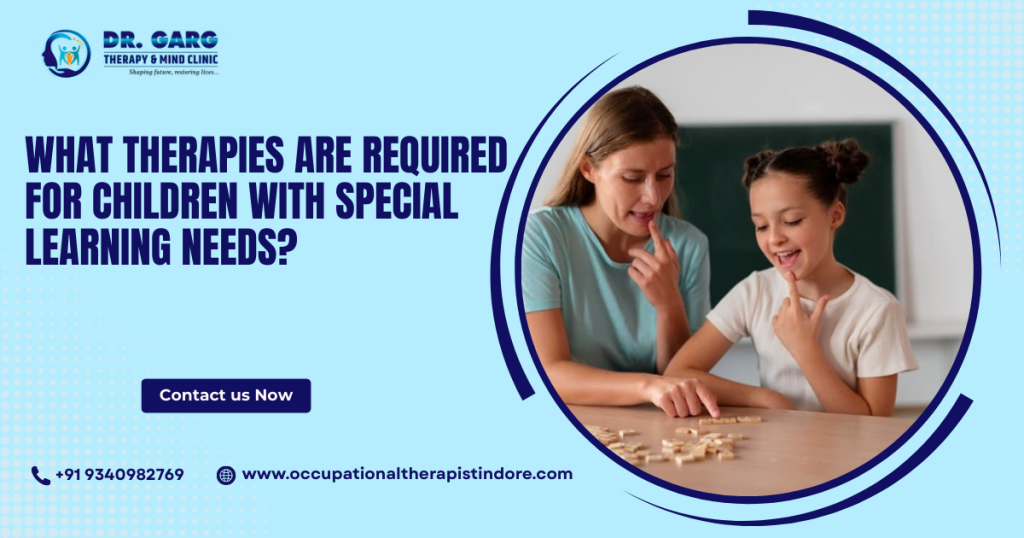
Children with special needs frequently require treatments not only in terms of medications, but also in terms of motor development, speech, and behaviour, among other things. The holistic development of a child is aided by this multidisciplinary approach. Following are some of the most commonly used therapies for children with special needs intervention.
Occupational Therapy
One of the most widely used therapies, with services available for both children and adults, Occupational therapy Indore is a specialized healthcare support that helps individuals of all ages manage physical, sensory, and cognitive challenges. Occupational therapists are trained professionals who assist people in overcoming barriers that impact their emotional, social, and physical well-being. They use engaging daily activities, exercises, and therapeutic techniques to support development and recovery. Occupational therapy Indore focuses on improving fine and gross motor skills, enhancing hand-eye coordination, building essential life skills, and developing social abilities, helping individuals lead more independent and confident lives.
Speech Therapy
The screening and treatment of communication issues and speech disorders is known as speech therapy Indore. Speech-language pathologists (SLPs), also known as speech therapists, carry out this process with expertise and care. Various techniques are used to improve communication, including articulation therapy, language intervention exercises, and other specialized methods based on the individual’s needs. Speech therapy Indore is beneficial for both children and adults dealing with different speech and language difficulties. Early intervention plays a crucial role in achieving better results. With the right guidance and therapy, individuals can significantly improve their communication skills, confidence, and overall quality of life.
Behavioural Therapy
Behavioral therapy is a catch-all phrase for various types of therapy used to treat mental disorders. This type of treatment aims to detect and assist in the modification of potentially harmful or unhealthy behaviours. It is based on the notion that all behaviours are taught and that unhealthy behaviours can be modified. Treatment is usually focused on present issues and how to address them.
People with a wide range of problems can benefit from behavioural treatment. Behavioral therapy is most typically used to treat depression, anxiety and panic attacks, troubles with rage. It can also aid in the treatment of the following illnesses and disorders: eating disorders, PTSD (post-traumatic stress disorder), Phobias associated with ADHD, especially social phobias, Obsessive-compulsive disorder (OCD), drug abuse, and self-harm to name a few. Adults and children alike can benefit from this form of therapy.
Applied Behaviour Analysis Therapy
Applied Behaviour Analysis (ABA) is a sort of therapeutic intervention that uses reward approaches to improve social, communication, and learning skills. It can focus on specific skill learning such as fine motor dexterity, sanitation, grooming, and so on, in addition to enhancing general adaptive behaviours like social skills and learning skills. Autism Behavioural Therapy is another name for it, but it’s simply one of ABA’s applications. In a number of contexts, including schools, homes, and clinics, ABA is beneficial for both children and adults with psychological disorders. It’s also been proven that consistent ABA therapy can improve positive abilities and behaviours while reducing the need for future special assistance.
ABA therapy Indore programmes can help children with language and communication abilities, attention, focus, social skills, memory, and academic performance, and reduce the frequency of behavioural issues. ABA therapy uses knowledge of how behaviour works in real-life circumstances to boost useful behaviours and decrease detrimental or learning-inhibiting behaviours. ABA is a type of flexible treatment that may be tailored to each individual’s needs. It can be delivered in a variety of settings, including the home, school, and community.
A licensed behavioural psychologist is in charge of the program’s design and oversight. The ABA programme is customized to the child’s talents, needs, interests, preferences, and family situation. The ABA programme begins with a thorough evaluation of the child’s current skills and preferences in order to develop specific therapy goals. Techniques such as positive reinforcement, negative reinforcement, using prompts and cues, Task analysis, and Generalization are used.
Aside from the therapies stated, there are a few others that can aid in the development of a kid with special needs. The following are the details: Art therapy, music therapy, aqua therapy, vision therapy, listening therapy, neurofeedback therapy, and social skills training therapy are all examples of different types of therapy.
Personalized and unique help is very beneficial to children with special needs. All the mentioned therapies utilize strategies to help children who need a little extra help grow into independent, well-adjusted, and cheerful people.
Conclusion
Children with special learning needs often benefit from a combination of therapies such as speech therapy, occupational therapy, behavioral therapy, and special education support. These therapies help improve communication, motor skills, focus, and overall learning ability. Early intervention and personalized therapy plans play a key role in enhancing a child’s development and confidence. With the right guidance and consistent support, children can achieve better independence and academic progress. At Dr. Garg Therapy & Mind Clinic, experienced professionals provide comprehensive care and tailored therapy programs to support every child’s unique needs and help them reach their full potential.
